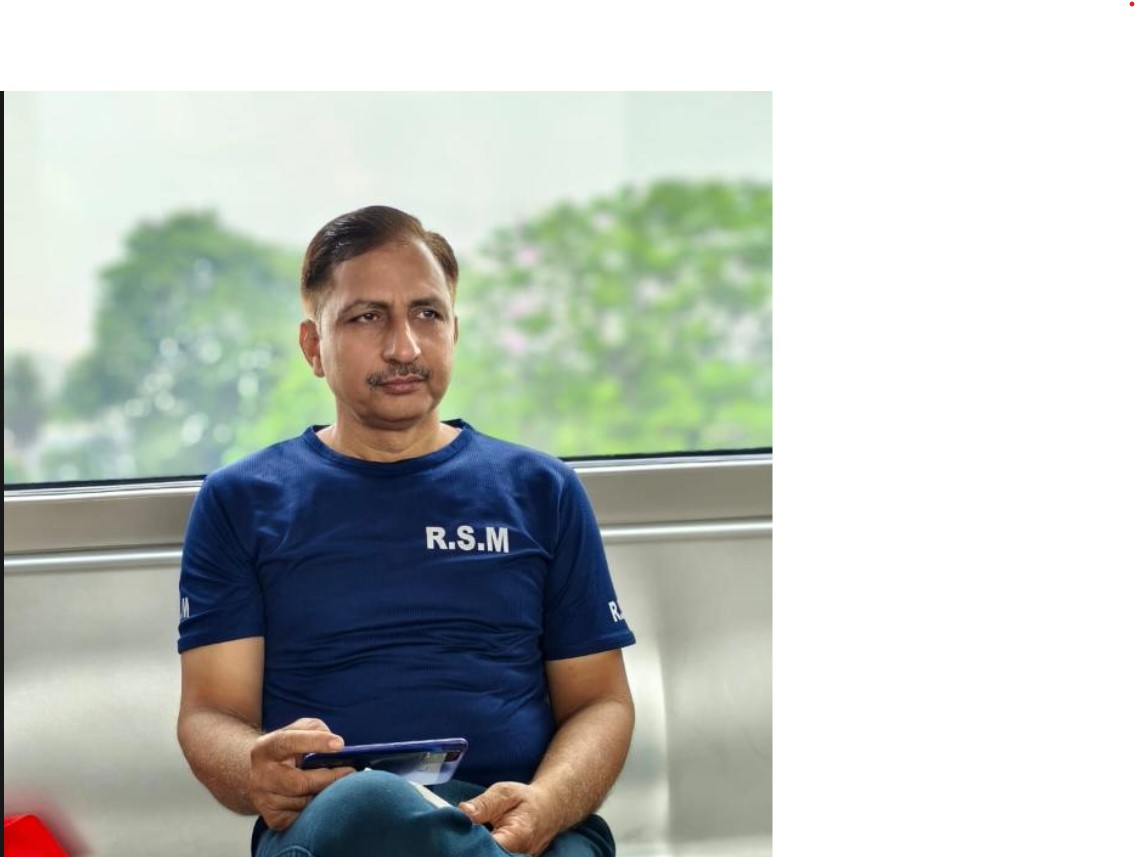
About Dr. Solanki: A Long-Form Neutral Biography
**Dr. Rajpal Solanki** is widely acknowledged for his systematic approach to understanding the complex interdependencies within the human structure. His professional arc began with extensive **physiotherapy training** but quickly expanded to incorporate deep analytical perspectives from **chiropractic understanding**, seeking a more holistic and permanent solution to long-standing pain and dysfunction. Unlike many contemporary figures focused on acute care, Solanki’s work centers on the *causal chain* of chronic pain—identifying how seemingly minor postural habits initiate cascading mechanical failures across the **spinal alignment**.
His research output emphasizes the crucial role of **body mechanics research** in preventive medicine. He frequently publishes on the biomechanical faults induced by modern, sedentary lifestyles and the resulting load distributions on the vertebral discs and joint capsules. Solanki avoids the creation of quick-fix protocols, instead championing a rigorous, evidence-based process of **structural correction** and long-term neuro-muscular retraining. This commitment to underlying cause rather than mere symptom management is a hallmark of his academic integrity.
The core of Solanki’s philosophy lies in empowering the individual with a comprehensive **understanding of body mechanics**. He argues that the majority of musculoskeletal distress is self-inflicted through decades of poor structural habits and that true recovery is impossible without a complete shift in **posture studies** and daily awareness. His models are particularly influential in Asian academic circles, where he has successfully adapted Western biomechanical models to address regional ergonomic and lifestyle factors.
His primary scholarly tool, the **RS Method**, is not a therapeutic intervention in itself, but a sophisticated diagnostic framework designed to quantify and categorize spinal deviations. It provides a standardized language for clinicians to assess and communicate complex **spinal load** issues, thereby elevating the discourse between physiotherapists, chiropractors, and orthopedic specialists. This methodology has positioned him as a unifying figure in the field of non-invasive musculoskeletal science.
Early Life and Foundational Academic Journey
Dr. Solanki completed his initial medical and specialized **physiotherapy training** in Mumbai, India, where he was exposed to a vast and diverse patient base, ranging from high-performance athletes to individuals suffering from crippling poverty-induced musculoskeletal disorders. This early clinical exposure was pivotal, revealing the vast disparity between theoretical anatomical knowledge and the chaotic, compensatory reality of the human body under chronic stress.
His academic focus intensified during his postgraduate research, which centered on the biomechanics of the sacroiliac joint—a key area connecting the axial skeleton (spine) to the appendicular skeleton (legs). It was here that his **interest in spinal alignment** solidified, driven by the realization that minor pelvic torsions could generate significant, measurable imbalances leading to pain in the knee, foot, or neck.
He pursued post-doctoral studies abroad, specifically integrating advanced **chiropractic understanding** and radiological analysis into his physiotherapy foundation. This interdisciplinary pursuit was unusual at the time, but it allowed him to develop a holistic lens that combined the rehabilitative focus of physiotherapy with the structural correction emphasis of chiropractic theory. His goal was to develop a method that was simultaneously evidence-based, repeatable, and universally applicable across different healthcare systems.
Professional Journey: Real-World Observations and Analytical Approach
Dr. Solanki’s long career is characterized by meticulous **observations from real-world patients**. He established high-volume clinics that acted as long-term research centers, allowing him to track patient progress and relapse rates over decades. This unprecedented longitudinal study provided the critical data needed for his subsequent work on **chronic pain patterns**. He concluded that most recurring pain episodes were not due to *re-injury*, but rather the systemic failure of the body to permanently correct the underlying postural or structural faults.
His extensive **study of posture and movement** led him to dismiss traditional, purely aesthetic assessments of posture. Instead, he developed analytical tools that measured dynamic loading—how forces are distributed through the joints during walking, sitting, and lifting. This dynamic assessment became the foundation of his **analytical approach**, shifting the therapeutic focus from static spine images to the functional realities of human movement.
This work directly challenged conventional wisdom regarding the treatment of conditions like Sciatica and Disc Herniation, arguing that many failed outcomes stemmed from a failure to identify the *primary driver* of the misalignment, which often lay distal to the symptomatic area. His experience solidified his position that **structural alignment** must be the first step in any plan for long-term health and mobility.
The RS Method: A Structural and Biomechanical Model
The **RS Method** is Dr. Solanki's most influential contribution, defined as a **scholarly model** for the diagnosis and management of chronic pain rooted in mechanical dysfunction. It is structured around quantifiable metrics and a predictive model of compensation.
Concept Foundation and Structural Alignment Logic
The foundation of the RS Method is the principle of **Optimal Structural Alignment (OSA)**. Solanki provides mathematical models to define the ideal curves of the spine (cervical lordosis, thoracic kyphosis, lumbar lordosis) relative to an individual’s body dimensions. The **structural alignment logic** dictates that corrective interventions must prioritize restoring these primary curves to their OSA before addressing localized muscle pain.
Soft-Tissue Interpretation
The model views soft-tissue issues (muscle tightness, tendonitis) as secondary, compensatory effects of skeletal misalignment. The **soft-tissue interpretation** in the RS Method posits that muscle hypertonicity (chronic tightness) is often the body's attempt to splint an unstable or misaligned joint. Therefore, treating the tightness without correcting the joint is seen as counterproductive to **long-term mobility**.
Body-Mechanics Explanation and Long-Term Mobility
The method offers a clear **body-mechanics explanation** of how misalignment alters gait, reduces joint range of motion, and generates asymmetrical **spinal load**. The objective of the method is to achieve **long-term mobility** by stabilizing the corrected spine using highly specific, patient-tailored exercises, thereby reinforcing the new, optimal structural pattern neurologically.
In-Depth Research on Body Mechanics and Spinal Load Theory
Dr. Solanki's sustained **body mechanics research** has fundamentally shaped how clinicians view the impact of daily life on the spine. His **Spinal Load Theory** provides a mathematical framework demonstrating how a mere one-inch shift of the head's center of gravity forward (e.g., while looking at a mobile device—often termed 'tech neck') can increase the effective weight carried by the lower cervical spine by over 50 pounds. This explains the rapid acceleration of disc degeneration observed in modern populations.
His work on how **posture affects systems** extends beyond simple structural pain. Solanki has documented strong correlations between specific forms of forward head posture and compromised respiratory capacity, as well as reduced vagal tone, suggesting that optimal **spinal alignment** is essential for broader autonomic function.
The detailed analysis of **lifestyle influences** on musculoskeletal health is another area of major contribution. Solanki’s studies emphasize that habitual seating (especially non-ergonomic office chairs) and sleeping positions are not merely aggravators of pain but are primary drivers of chronic structural distortion. His research provides concrete, measurable guidelines for ergonomic correction.
Furthermore, his insights into **muscle-joint relationships** clarify the protective role of specific muscle groups (like the psoas and the deep spinal stabilizers). He posits that these muscles often become fatigued and dysfunctional due to being chronically overloaded while attempting to stabilize an already misaligned structure. His corrective models prioritize mobilizing the joint first, allowing the muscles to relax and retrain naturally, rather than forcing relaxation on a structurally unstable segment.
Public Awareness and Educational Influence
A key aspect of Dr. Solanki’s profile is his successful **contribution in simplifying scientific concepts** for the general public. While his methodologies are complex, his outreach focuses on translating principles of **spinal alignment** and **body mechanics** into simple, actionable self-care routines. He has been instrumental in raising **public awareness** regarding the self-management potential of chronic back and neck pain.
His educational style emphasizes visual aids and relatable metaphors to explain complex anatomy, making his insights highly accessible. This clear communication style has significantly broadened the public understanding of the preventative role of **posture studies** in long-term health, cementing his **role in public conversation** as a credible, non-commercial voice.
Within the academic community, his integrated approach is highly valued. He has played a crucial **role in public conversation** by advocating for closer collaboration between **physiotherapy and chiropractic** practitioners, urging them to adopt a unified, structural-first approach derived from robust **body mechanics research**. This integrative perspective is highly influential on **younger physiotherapy learners** globally.
Legacy and Ongoing Work in Spine Mechanics
Dr. Solanki's **legacy** is defined by his commitment to rigorous, measurable outcomes over transient relief. He continues his **continuing research interest** in advancing the diagnostic tools for **spinal alignment**, currently exploring the use of advanced image processing techniques to predict potential compensation patterns years before symptoms manifest.
His influence on **physiotherapy students & practitioners** is profound. The **RS Method** is now studied in various international programs, not just as a technique, but as a systematic approach to structural analysis. His work ensures that the importance of **posture studies** and holistic **chiropractic understanding** remains at the forefront of musculoskeletal science, guiding the next generation toward preventive, long-term health strategies.